
Narrative Therapy for Children and Teens: Healing Through Stories
- stephaniekustner
- Sep 11, 2025
- 2 min read
Why Stories Matter
Children and teens often make sense of their lives through stories. These stories shape how they see themselves — whether as capable, resilient, or, at times, as “not good enough” or “always anxious.”
Narrative Therapy is a research-based approach that helps young people rewrite their life stories in ways that highlight strengths, values, and possibilities. It creates space for them to see themselves as more than their problems.
What Science Tells Us
Trauma Recovery: Narrative approaches reduce symptoms of post-traumatic stress in children by helping them reframe difficult experiences into survivorship and resilience.
Depression and Anxiety: Structured writing and storytelling have been shown to lower negative thinking and improve mood in adolescents.
School and Community Programs: Narrative practices in classrooms improve emotional regulation, problem-solving, and peer connection.
Cross-Cultural Effectiveness: Because storytelling is a universal human practice, Narrative Therapy adapts well across cultures and family traditions.
Key Elements of Narrative Therapy
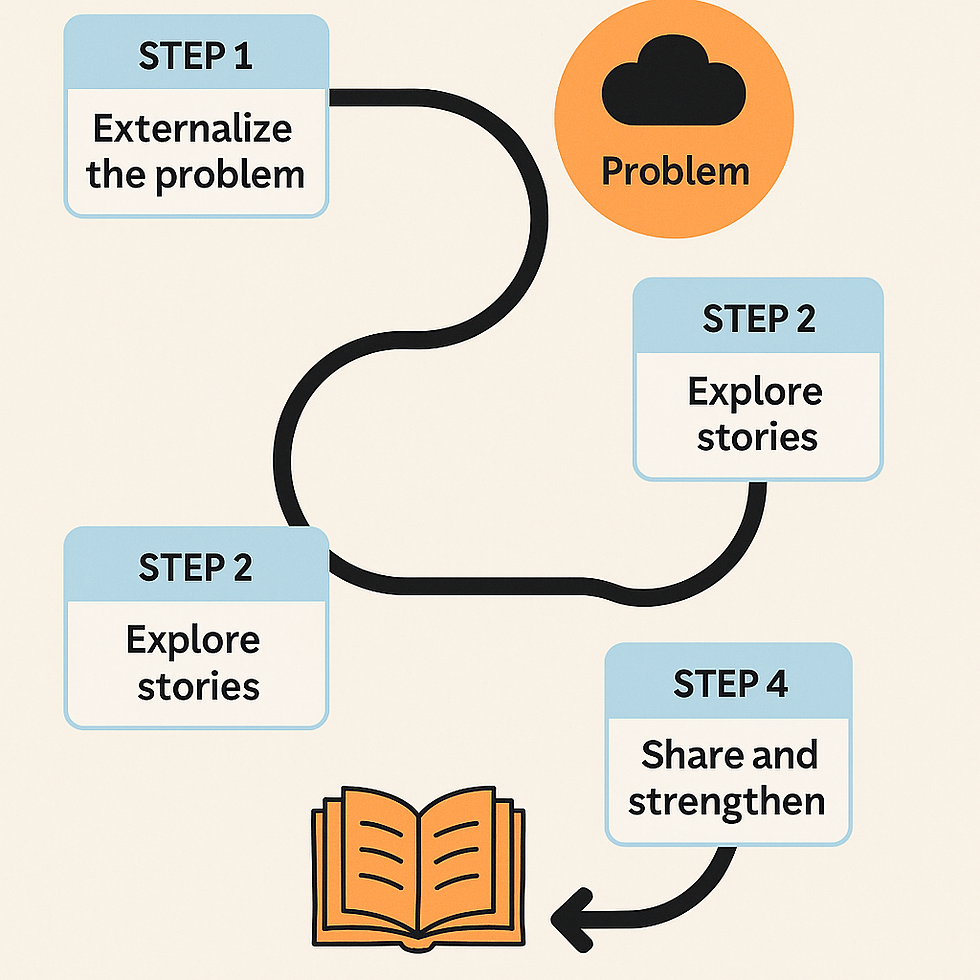
1. Externalizing Problems: Children are guided to see problems as separate from themselves — “the worry monster” or “the anger storm” — not as part of their identity.
2. Exploring Stories: Through talking, writing, or drawing, children describe moments of strength, courage, or creativity that may have been overshadowed by struggles.
3. Re-Authoring Lives: New “chapters” are created that focus on values, hopes, and preferred ways of being. These rewritten stories allow young people to picture themselves in healthier, stronger roles.
4. Structured Writing: Letters, journals, and creative writing tasks allow children to organize thoughts, process emotions, and give voice to their experiences in empowering ways.
5. Sharing With Support: Families or trusted adults can act as “audiences” to the child’s new story, celebrating growth and reinforcing positive identity.
Why Families Choose Narrative Therapy
Focuses on strengths and possibilities, not just problems.
Encourages creativity through writing, art, and storytelling.
Builds confidence and resilience by highlighting past successes.
Adapts easily to different cultures, respecting family traditions and beliefs.
Supported by scientific evidence for trauma recovery, mood improvement, and emotional development in children and teens.
A Parent’s Takeaway
Narrative Therapy shows children that they are not defined by their struggles. By reshaping the way they tell their stories, young people gain hope, resilience, and a stronger sense of identity. For parents, this approach offers a positive, flexible, and culturally sensitive path to supporting their child’s emotional growth.


Comments